Where does the rain go? Checking runoff around an Omaha home

After a fall rain, follow the water coming off your roof. If the downspout empties beside a walkway or into a low spot near the house, look past the end of the pipe and see where the water goes next. In the Omaha metro, clay soil can hold water, so a wet patch may linger after the rain has stopped.
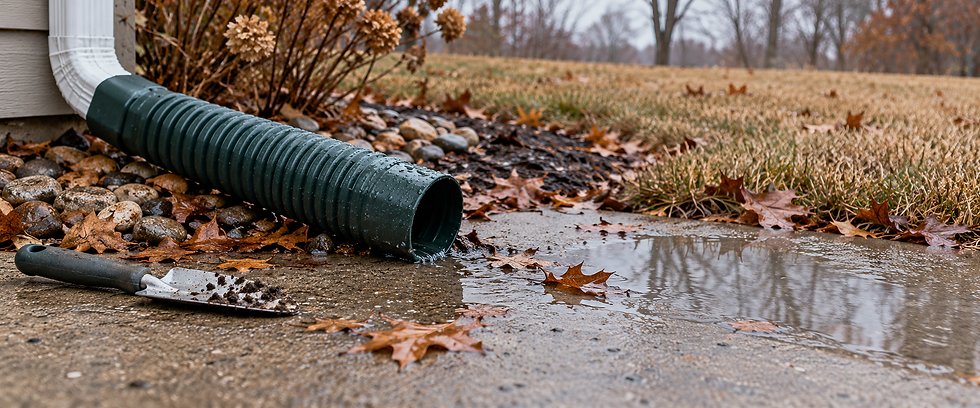
AI-generated illustration; not a photograph of a Divine project.
That patch is useful information. It can show where runoff gathers, where the ground directs it and what needs a closer look before winter. Here is what to notice and what to bring up when you ask a contractor about the yard.
Start at the downspout
Look for leaves caught at the outlet, a disconnected extension or a splash area that has washed mulch out of a bed. During rain, watch from a safe place to see whether water comes out where you expect it to. Check again after the rain and follow any wet trail across the soil or paving.
An extension can carry water away from the wall, but its outlet still needs a place for the water to go. Notice if it empties onto a walkway, toward a neighboring property or into a low area that already stays wet. Keep the path clear for anyone who uses the walk, and avoid creating a tripping hazard.
Look at the whole route
A wet spot may be downhill from the place the water starts. Walk from the downspout toward the low ground and look for a narrow path worn through mulch, exposed soil, or leaves caught where the water slows. Note where the water crosses the lawn or meets a patio edge.
Take photographs after a rain and again after the area has had a chance to dry. A picture of the downspout, the route and the place where water collects helps show what happened when someone visits on a dry day. Write down what you saw and how long the area stayed wet rather than guessing from a single puddle.
Notice what happens through a thaw
Water that collects on a walk can become a slick spot when temperatures drop. In winter, look from a safe location for meltwater crossing a route you use to get to the door. Snow piled along the edge of a walk can change where meltwater goes, so note where it gathers as well.
Do not walk on ice to inspect it. If water repeatedly collects against the house, appears inside the basement or creates a dangerous icy path, have the condition assessed promptly by an appropriate qualified professional. A photograph taken from a safe spot gives them a starting point.
Ask what is sending water there
Standing water can have more than one cause. Roof runoff, the shape of the ground and compacted soil may all be part of the picture. A drain or buried pipe might be appropriate in some yards, while another property may need a different approach. The outlet matters too: moving water away from one spot should not create a problem somewhere else.
Ask a contractor to explain where the water enters the proposed route, where it will discharge and how the plan accounts for the slope. Ask about existing utilities and any local requirements before digging or changing drainage. If the source or safe outlet is unclear, a site assessment comes before choosing a material.
What changes the work
The length of the route, access to the work area, existing paving and the available outlet all affect the work involved. A narrow side yard may require a different approach from an open lawn. Established plants, fencing and buried utilities can affect where a route can go and what needs to be protected.
At Divine Landscape and Design, Hunter visits the property before quoting. Bring the photographs and point out the spots that stay wet, including places you only see after a thaw. We can look at how the landscape and the water route relate before discussing the work.
After the next rain, photograph the downspout outlet and follow the wet ground to the lowest spot you can see. Those pictures are a useful place to start the conversation.


Comments